Sacramento's Best Bat Removal
We've been voted Sacramento's best bat removal company the past two years!
Get in touch
Bat Experts
Rapid Response
Trained & Educated
Licensed & Certified
About Sacramento Bat Removal
Welcome to sacramentobat.com. We are the only qualified bat removal company in Sacramento, California. When bats move into a new home, it doesn't take long for them to make a mess. Guano is gross and attracts insects. While important in nature, in your home it's definitely not desirable. Even after you've called someone to remove the bats, the mess they created will remain. That's why we not only offer bat removal services, we also clean up after the bats are gone. Our company proudly offers complete cleaning, sanitizing, and decontamination services for any area that has had bats living where they shouldn't have roosted. Removing the bats won't magically remove the mess they created while they lived there, and you shouldn't have to try and take care of it yourself. We have the tools and training to properly and safely clean up after the bats. While we do like bats, we like them a lot more when they don't live where they shouldn't. We also know what a mess they make, and that's why we're so dedicated to cleaning up after them. Save yourself the risks and gross factor of trying to clean up guano yourself. Trust the experts to handle it so you don't have to worry about the mess or the bats that created the mess in the first place. Guano can do a lot of good, but not when it's inside your house. There it just makes a mess that can attract all sorts of nasty stuff. Let the experts handle the mess, because when we're done, you won't be able to tell the bats wherever there is. We operate 24-7-365, so don't hesitate to call us at 279-895-5439 to discuss your bat problem and schedule a fast appointment.
Residential
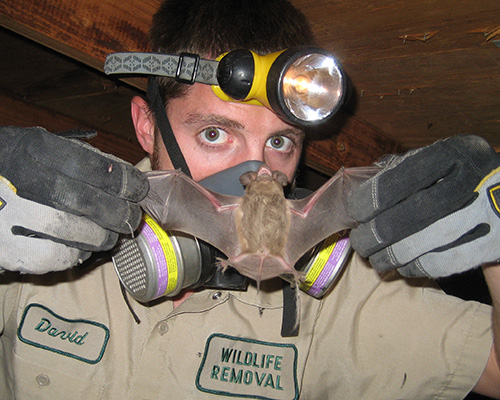
We are experts at removing bats from residential properties. Whether you have a single bat trapped in your house, a colony roosting in your attic, and/or various other problems, there is no need to worry! During our removal process, we make sure to inspect your entire home carefully, tracking down all the entrypoints bats are using to invade your place. Next, we perform a process called live exclusion (where no bats are harmed and all exit your property), then seal all entry holes completely shut. We also take care of the cleanup process after, so your home is safe and clean!
Learn MoreCommercial
Besides residential areas, we also have a wealth of experience removing bats from commercial properties! We begin by investigating the area for possible bat entrances, covering holes even as small as 1/4 of an inch. Through our live exclusion process, bats leave the building through one-way exits, and we seal up every hole afterward. Once the bats have been removed, we perform a cleanup process. This includes dealing with guano, replacing damaged insulation, and decontaminating the place.
Learn More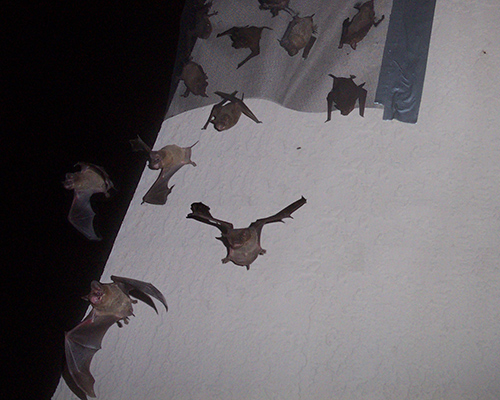
Contact us for bat removal today!
What Our Customers Say
I had a bat flying around in my house at 9pm, and CITY bat removal came right out and caught it in a net.
Sarah Lakewood
I had an annoying colony of bats stuck in my attic for a while before I finally decided to call for help. They were able to quickly and thoroughly solve the problem!
Brandon Chung
They did a great job clearing my attic of bats and didn't hurt any of the creatures.
Charlotte Demers
The technicians at CITY Bat Removal are skilled, professional, and know exactly what they're doing. Would highly recommend.
Mark O'Connor
My house stank of bats and their guano inside my wall. CITY Bat Removal not only removed the bats, they also got rid of the smell!
Alexis Ramirez
.jpg)
What is a maternity colony?
Motherhood is a strange, exciting time in the life of any female, and bats are no different. In fact, it can be fascinating to learn about the habits of other creatures, in order to better understand them, and there are few things more interesting about bats than their maternity colonies.
In the lines below, we'll look at what exactly these colonies do, how they work, and indeed, why they are formed in the first place. But before we get to that, let's take a moment to understand bat reproductive habits, since after all, you couldn't have a maternity colony without mating.
Bat mating habits - how things happen
As is the case with many animals, bats' reproductive habits are heavily influenced by external factors, such as the weather. Female bats generally opt to become pregnant and give birth during the summer, because they have much easier access to food that way, than they would, say, during winter.
Oh, and when we say "opt", we do actually mean opt. Female bats have the fascinating ability to store semen inside their reproductive tract and decide when it is used to impregnate. This way, the female bat gets to choose the time that is ideal for her to have babies. And most females will opt for summer because it will be easier for them to feed, and for their babies to develop during that time.
Depending on the climate, some females may opt for multiple births in one year, but most bats in temperate climates usually reproduce about once a year.
So, what's a maternity colony?
As a general rule, bats tend to roost together in larger colonies, in order to ensure safety. Most colonies will hibernate during winter, then spend much of the rest of the year flying with their initial colony. That is until the mating season begins in the summer. As the female bats become pregnant, they will band together to form a new colony, different from their initial one. This is called a maternity colony and is made up exclusively of pregnant female bats. Generally, a maternity colony consists of roughly 40 pregnant females, although it can be much higher, up to 200 females at a time, depending on the size of the initial colony.
A maternity colony will then look for a new, warm, dark, and safe place to bring their young into the world. Usually, a female bat will birth one single bat.
What's the point of a maternity colony?
The main reason why females band together to form this new, separate colony is that it allows them a safe space to birth their young and support one another through their pregnancies. For example, in a maternity colony, the females will huddle together to keep warm. They will also form a sanctuary of sorts, in which new mothers can nurture their young and raise them to independence. As the pups grow older, the mothers will become more and more willing to leave their side in search of food.
What can you do if you discover a maternity colony inside your home?
Since human dwellings (particularly attics, sheds, and basements) provide an ideally warm and safe place during the summer, they're a big favorite of maternity colonies looking for a good home. And while that may sound like a hassle to you, bat maternity colonies are protected by law because of the beneficial role that bats play for the environment. Since their main diet is made up of insects, they are necessary to the wellbeing of our environment, so you don't have much of a choice.
Also, be aware that female bats are highly sensitive during this season, and may abandon their young if disturbed. The good news, however, is that as time wears on and the pups become more independent, the colony will eventually relocate on its own!